SMS on the Grind
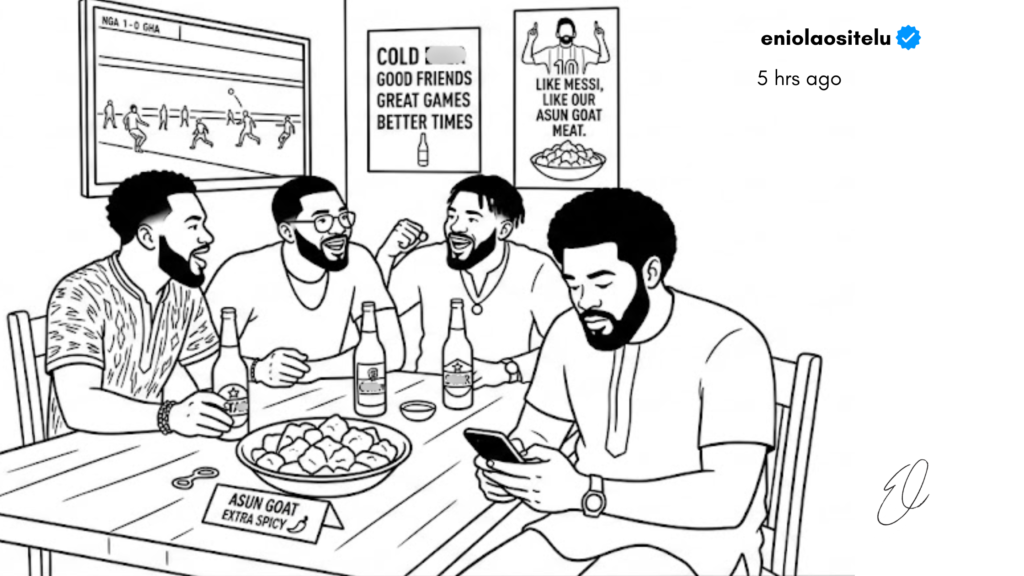
Ibrahim lay flat on the bed, hands folded beneath his head, staring at the ceiling as though answers might drip from it. Yesterday’s conversation kept replaying itself in loops. They were running out of food.
For three years now, work had been a story he told in the past tense. The last job, he had simply stopped showing up for. Stress, he said. Not his dream. His dream was music, studio lights, streaming platforms, a mic in his hand and fans screaming his name, not fluorescent office bulbs and a boss breathing down his neck.
Risi, his wife, did not share the fantasy. A tailor by trade and by tenacity, she had swallowed her pride to beg a customer to help secure that job for him. Three children later, the youngest barely seven months old, she still could not understand how a grown man walks away from stability and leans fully into vibes.
That morning, as she tied shoelaces with the baby balanced on one hip, her voice carried into the bedroom.
“Daddy, we don’t have enough to last the weekend. I need to go to the market today.”
She won’t shout or haul insults. She would just focus on the critical matters arising.
Ibrahim knew he was fortunate. At the bar, his friends told war stories about flying plates, busted lips and insults sharpened like knives. Risi did none of that. She would respectfully push and endure. She would remind him to fix the kitchen bulb, to buy four litres of fuel for their “I better pass my neighbour” generator so the fan could ease the baby’s heat rash. Grace under pressure, and perhaps that was his greatest advantage. He would never push her too far. He was careful about it, calculated.
Because Ibrahim had a system.
His phone, his contacts, and his WhatsApp. That was his office.
He had categories and targets, thirty names per round, mostly existing givers. The minimum return was five thousand naira. Some would stretch to twenty. A generous few, bless their soft hearts, would do fifty.
The harvest was usually good. He drafted each message the way a campaign strategist would, subtle desperation carried by measured urgency, the children positioned carefully in the script alongside school fees, food and medical bills. Never too dramatic, but enough to whip emotional sentiment.
Within days the alerts would begin to sing, and the first transfer always went to Risi, always promptly, because that was what bought him credibility. She would ask her questions gently and persistently, and he would reassure her.
“No now, it’s not illegal. It’s investment in these apps that are yielding profit. Don’t worry yourself.”
She would sigh and let it rest. If only she knew.
His sponsors were scattered across his social web, alumni groups, church, mosque (yes, Ibrahim kept his options open), parties, gigs, Facebook acquaintances he had never met in person. Some of them struggled more than he did, but perception was everything, and there were months he earned more than the very people who pitied him.
Now he sat at the bar with laughter rising around him like smoke, a fresh hustle text already gone out. He lifted his Trophy beer, anticipating the first credit alert.
Then he saw him across the room, a familiar face, still and watching him. One of the thirty.
Ibrahim’s hand froze mid-air with the bottle hovering inches from his lips, and time thinned out around him. Teleportation would have been useful. But Ibrahim did not believe in shame, he believed in quick thinking. So he dropped the bottle back on the table, forced a wide grin and sprang to his feet.
“Heeyyyy, Lakeside! Long time, my guy! How you dey?”
Because when survival is your business model, confidence is the only armour you can afford.